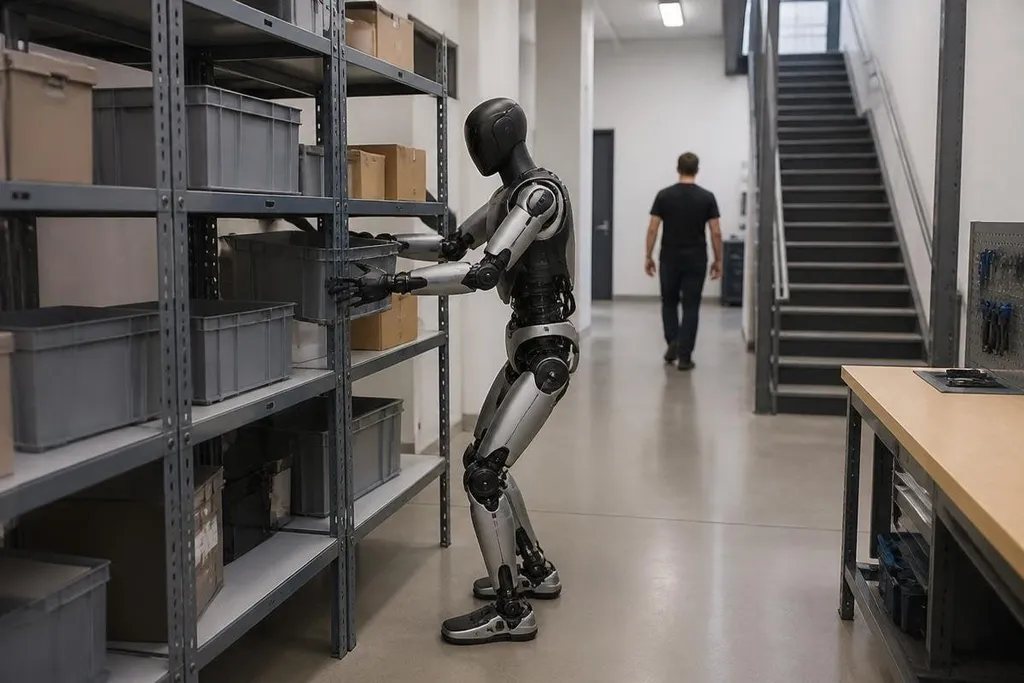
Humanoid robots are being built around a practical fact: most workplaces already fit human bodies. Doors, shelves, stairs, tools, and workbenches were made for people, so a robot with a human-like body may use the same spaces without a full rebuild.
That idea explains the interest. It doesn’t prove that humanoid robots can do useful work at a good cost. The hard part is showing reliable work outside a short demonstration.
Quick read:
- Existing buildings may need fewer physical changes.
- Two arms and a human-sized body can cover tasks built for people.
- Reliability, safety, maintenance, and price still decide whether a robot earns its place.
The building is already there
A warehouse or factory contains many objects that mobile robots can’t reach easily. A step can block a wheeled base. A narrow aisle can limit turning space. A workbench may place parts at a height that suits a standing person but not a low machine.
The humanoid body addresses that fit problem through legs, a torso, and arms. It can carry tools at roughly the same height as a worker and reach shelves designed around human movement. That can reduce changes to floors, racks, and workstations.
The tradeoff is mechanical. Legs need balance, and balance needs sensors, motors, software, and power. A wheeled robot gives up stairs and uneven floors, but it usually has fewer moving parts to control. The humanoid robot earns its place only when human-shaped access matters more than that added hardware.
The useful part is the hands
The body gets attention, but the hands may decide the business case. Many work tasks involve picking an object, turning it, placing it, and then handling a different object. A fixed gripper can work well when every item has the same shape. Human-style hands may help when the task changes from one object to the next.
That flexibility comes with a cost in control. The robot must sense contact, set the right grip force, move without hitting nearby objects, and recover when an item shifts. A short clip can show the planned motion. A worksite needs the same task to keep working after hundreds of repetitions.
Repeated movement turns a demo claim into a work question. Robot24.com humanoid robot reports can tie the maker’s claim to the task, test setting, and stated limits, so you can judge whether the system fits the controlled jobs that come next.
A first job for a humanoid robot is more likely to involve repeated movement in a controlled area than open-ended work around people. The task may include moving items between fixed points, feeding parts into a process, or handling objects that already have known locations.
That setting gives engineers a smaller problem. They can map the work area, limit the number of objects, set safety zones, and watch the robot’s failure rate. Each limit makes the test less like general human labor, but it also makes the result easier to measure.
The robot still has to answer basic questions before a company can buy one:
- How many hours can it work before charging or service?
- What happens when it drops an item or loses balance?
- Can a technician replace a motor or sensor without sending the robot back?
- How much floor space does it need to move safely?
- Does the full system cost less than changing the task for another robot?
The answers matter more than the shape of the machine. A robot with two legs may fit a building well and still lose money through slow motion, frequent stops, or difficult repairs.
What is still unproven
Humanoid robots face a long list of tests that a demonstration can avoid. They must work across shifts, handle small changes in objects and lighting, stop safely near people, and keep their joints and hands working.
Those demands also raise questions about batteries, heat, software updates, spare parts, and training. A trial that leaves those costs out can make the robot look ready before the work has been measured.
I think the case for humanoid robots is strongest where a site already has many human workstations and frequent task changes. A fixed robot is a better choice when the same motion can run in one place all day.
Before a purchase, use this check:
- Define one task and its required cycle time.
- Count failed picks, stops, and recovery actions.
- Measure charging, service, and operator time.
- Compare the robot with a fixed cell or mobile base.
- Set a result that would justify keeping the system after the trial.
The next useful proof will be boring by design: a named site, a clear task, a long operating period, and published failure numbers. Until those details become common, humanoid robots are a serious engineering direction, but not a general answer for every workplace.